
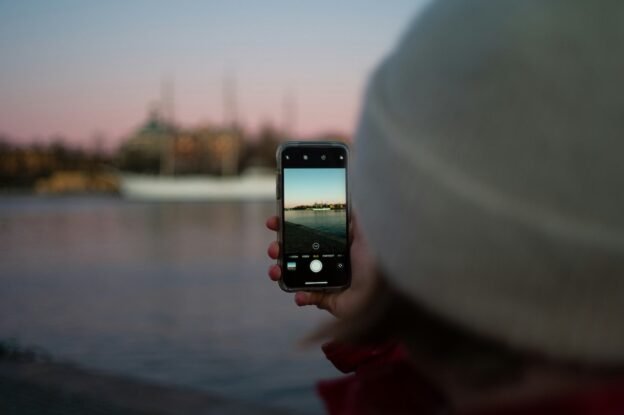
Travelling around Sweden is usually smooth, efficient, and surprisingly easy. Trains run on time, cities are clean and walkable, and even smaller destinations like Malmö feel incredibly well connected.
But there’s one thing many travellers still underestimate before arriving in Scandinavia, and that’s how important mobile data has become during modern travel.
Whether you’re navigating Malmö’s old town, finding your next train to Copenhagen, translating menus, accessing hotel bookings, or simply looking for the next coffee stop during a walking tour, reliable connectivity matters far more than it did a few years ago.
That’s where eSIMs are quietly changing the way people travel.
If you’re planning a trip to Sweden and wondering whether an eSIM is actually worth using, here’s a practical Q&A guide based on real travel experience.
What exactly is an eSIM?
An eSIM is a digital SIM card that allows you to activate a mobile data plan without physically inserting a plastic SIM card into your phone.
Instead of visiting a mobile phone shop after landing, swapping SIMs at the airport, or relying on expensive roaming charges from home, you simply install a data package digitally before you travel.
Most modern smartphones now support eSIM technology, including recent iPhones, Samsung Galaxy devices, Google Pixel phones, and many newer travel-focused devices.
For travellers, the main attraction is simplicity. You can often land in a new country and have working mobile data within minutes.
Why are eSIMs becoming so popular for European travel?
Convenience is probably the biggest reason.
Travellers increasingly want to avoid airport SIM kiosks, language barriers, paperwork, and hidden roaming costs. eSIMs remove most of that friction.
They’re especially useful for multi-country European trips. Many travellers now move between destinations quickly, perhaps spending a few days in Copenhagen before crossing into Malmö, then continuing onwards through Sweden or Europe.
Instead of constantly changing SIM cards, an eSIM allows travellers to stay connected throughout the journey.
Another factor is that Europe has become heavily dependent on digital services. Mobile tickets, QR-code restaurant menus, transport apps, online check-ins, maps, and cashless payments all rely on reliable internet access.
Do you really need mobile data while visiting Sweden?
Realistically, yes.
Sweden is one of the world’s most digitally connected countries. Many businesses rarely handle cash, transport systems are heavily app-based, and travellers tend to rely on their phones throughout the day.
Even relatively relaxed destinations like Malmö become much easier to navigate with reliable data access.
During walking tours, for example, many visitors use maps to continue exploring afterwards, save restaurant recommendations, or book onward transport. Having working data simply makes travelling feel smoother and less stressful.
Is roaming in Sweden expensive?
That depends entirely on where you’re travelling from.
For some European travellers, roaming charges may still be included within existing plans. However, travellers arriving from outside Europe, particularly from North America, parts of Asia, or Australia, can sometimes face extremely high roaming costs.
Even when roaming appears “included”, many networks still impose data caps, speed restrictions, or hidden fair usage limits abroad.
That’s one reason travellers increasingly prefer prepaid travel eSIMs instead. Costs are usually clearer upfront, and you know exactly how much data you’re getting before departure.
What are the advantages of using an eSIM instead of a physical SIM card?
There are several practical advantages.
Firstly, you keep your normal SIM card inside your phone. That means your regular number can often still receive calls, messages, or banking verification codes while your eSIM handles mobile data.
Secondly, activation is usually much faster. Most travellers simply scan a QR code and install the plan before flying.
Thirdly, you avoid wasting time searching for mobile phone shops after arriving.
That last point becomes especially valuable if you land late at night, arrive during a train transfer, or head directly into sightseeing.
Are eSIMs difficult to install?
In most cases, no.
Modern eSIM installation is usually very straightforward, particularly on newer smartphones.
Most providers supply a QR code along with setup instructions. Once scanned, the eSIM profile installs directly onto the phone.
The entire process often takes only a few minutes.
For less confident users, it’s usually worth setting everything up before travelling while connected to stable home WiFi.
Can you use an eSIM while travelling between Denmark and Sweden?
Yes, and this is actually one of the most useful travel scenarios for eSIMs.
Many visitors combine Copenhagen and Malmö in the same trip because the cities are connected by the Øresund Bridge and fast regional trains.
Without proper mobile coverage, travellers can sometimes run into roaming issues, network switching problems, or unexpected charges while crossing borders.
Travel-focused eSIM packages generally handle this transition much more smoothly.
This is particularly useful for travellers relying on Google Maps, digital train tickets, or translation apps during the journey.
What should travellers look for when choosing an eSIM provider?
Coverage reliability matters more than almost anything else.
Cheap plans can look attractive initially, but poor speeds or unstable coverage quickly become frustrating while travelling.
Travellers should also look carefully at:
- How much data is included
- How long the plan lasts
- Whether tethering or hotspot use is allowed
- Which local networks are used
- Whether setup instructions are clear
- If customer support is available while abroad
For Sweden specifically, travellers can arrange data before departure using SIMOVO’s Sweden eSIM.
Broader regional travel options and destination coverage are also available through SIMOVO.
Are public WiFi networks enough for travel?
Usually not.
While Sweden does offer decent public WiFi coverage in cafés, hotels, and transport hubs, relying entirely on public networks quickly becomes inconvenient.
You constantly need to reconnect, sign into portals, or search for available networks.
More importantly, public WiFi is not always ideal for security, particularly when accessing banking apps, travel bookings, or personal accounts.
Having your own secure mobile data connection tends to make travelling feel far more seamless.
Do eSIMs work well for walking tours and city breaks?
Very well.
Cities like Malmö are ideal for self-guided exploration, and travellers increasingly depend on their phones throughout the day.
During walking tours, many people use mobile data for:
- Navigation
- Restaurant searches
- Photography uploads
- Translation apps
- Public transport planning
- Travel bookings
- Messaging family or friends back home
Because Malmö itself is compact and walkable, having reliable data often removes the remaining friction from exploring independently.
Are eSIMs likely to replace traditional SIM cards completely?
It increasingly looks that way.
Many newer smartphones are already moving towards eSIM-first designs, and the travel industry has adopted the technology remarkably quickly.
For travellers, it solves several longstanding frustrations at once:
- No physical SIM swapping
- No losing tiny SIM cards while travelling
- No airport kiosk queues
- No confusing foreign mobile contracts
- No uncertainty around roaming charges
For anyone travelling regularly across Europe, eSIMs are rapidly becoming less of a “travel hack” and more of a standard part of trip preparation.
So, is an eSIM worth using for Sweden?
For most modern travellers, yes.
Sweden is one of the easiest countries in Europe to explore independently, but it’s also one of the most digitally connected. From train journeys and walking tours to restaurant bookings and mobile payments, staying connected has become a central part of the travel experience.
An eSIM simply removes one of the most common travel frustrations before the trip even begins.
And when you’re exploring somewhere as easy to wander as Malmö, that convenience becomes surprisingly valuable.